
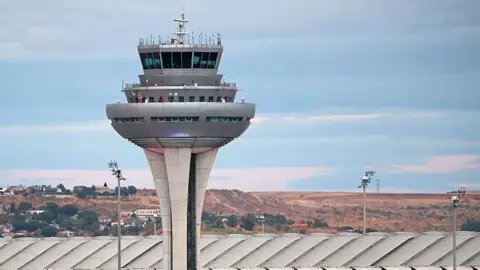
The Spanish government has restricted its skies to American warplanes involved in operations against Iran, according to Spain's defence minister Margarita Robles.
Clear Message
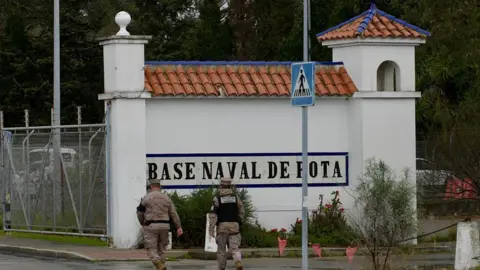
"We refuse to permit the use of the Rota and Morón for any acts related to the war in Iran," she said, adding that Spain had "expressed this stance to the United States from the outset."
Foreign affairs minister José Manuel Albares stated the aim of the decision was to "avoid any action that could prompt an expansion in this war."
American Reaction
The US did not immediately comment, but President Trump has in the past stated to impose a full trade embargo on Spain over its objection to the Iran war.
Spanish Prime Minister's Stance
Ever since the outbreak of the conflict in the end of February, the Prime Minister Pedro Sánchez has been a leading critic of the American and Israeli strikes, labeling them "reckless" and "illegal."
In early March, Sánchez said Spain had refused the US use of the two jointly run military bases at Rota and Morón, located in Andalusia.
"We are a sovereign country that has no desire to take part in unlawful conflicts," the Prime Minister declared.
He also announced that "every request that entailed operations related to the military action in Iran were denied - without exception, including those of support planes."
Logistical Consequences
Some US bombers involved in missions in Iran are stationed at the Fairford air base in Gloucestershire, after the UK agreed to a appeal from the US.
Planes departing from there will be compelled to avoid much of the region - either by routing across the eastern Atlantic or over France.
It has been reported that aircraft would be permitted to transit through Spain's airspace or land at the bases in case of emergency.
Broader Context
In a national broadcast, the leader reflected on global hostilities and said the Spanish government's policy could be described as "no to war."
Following this, the Iranian embassy in Spain noted Tehran would be responsive to requests from Madrid regarding passage through the Strait of Hormuz because Spain was "a supporter of global norms."
Global Oil Impact
Nearly one-fifth of the international petroleum typically travels through the strategic strait separating Iran and the peninsula of the Arabian peninsula.
Recently, the threat of attacks by Iranian drones, missiles has halted traffic, causing crude costs to soar.


